
Portal Berita Politeknik dan Kolej Komuniti
Motorcycle safety remains a major transportation concern in Malaysia, where motorcycles are extensively used for daily commuting, commercial activities and delivery services. Their affordability, convenience and ability to navigate congested roads make them an important mode of transport. However, these advantages are accompanied by considerable safety risks.
In 2025, Malaysia recorded 4,267 motorcyclist fatalities, representing approximately 65% of the country’s 6,581 road fatalities. This demonstrates the disproportionate vulnerability of motorcyclists and highlights the importance of targeted road safety interventions.
Unlike passenger vehicles, motorcycles offer little physical protection during collisions. Motorcyclists are also more sensitive to pavement defects, adverse weather, poor visibility and interactions with larger vehicles. Differences in vehicle size, speed and manoeuvrability create complex traffic conflicts, particularly along congested urban roads.
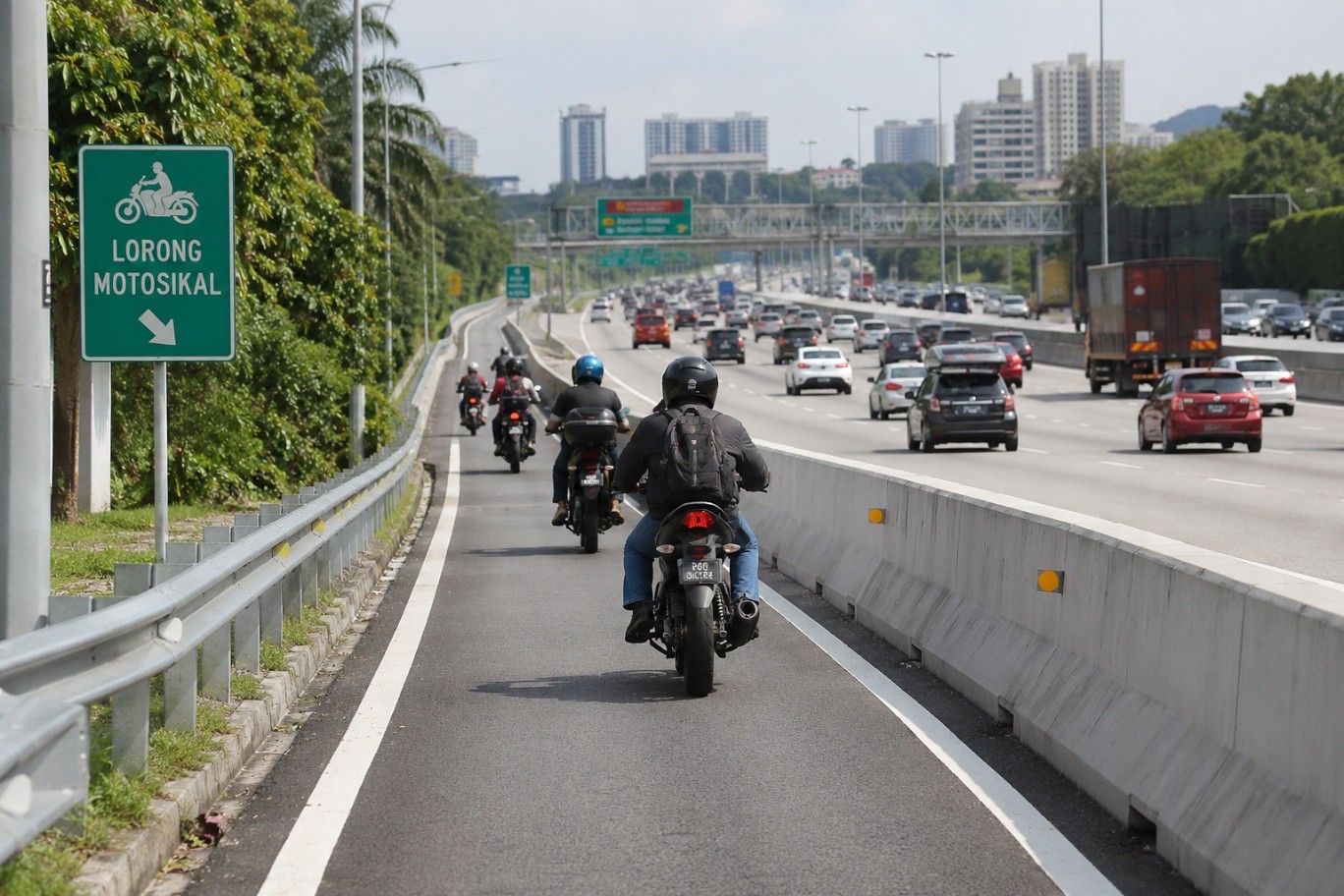
One engineering approach to addressing these problems is the provision of dedicated motorcycle lanes. These facilities aim to separate motorcycles from larger vehicles, reduce traffic conflicts and provide an operating environment better suited to motorcycle characteristics.
Malaysia has implemented both Exclusive Motorcycle Lanes (EMCLs), which are physically separated from general traffic and Non-Exclusive Motorcycle Lanes (NEMCLs), which typically utilise widened paved shoulders without continuous physical barriers. The Federal Highway FT002 is a prominent example of motorcycle segregation.
Nevertheless, providing motorcycle lanes does not automatically guarantee safer conditions. Their effectiveness depends on geometric design, pavement quality, drainage, lighting, roadside safety, intersection treatment, maintenance, enforcement and rider acceptance. This article evaluates these factors and discusses measures to improve motorcycle-lane safety within the Malaysian context.
Motorcycle Safety Issues and Contributing Factors
Motorcycle crashes generally result from interactions among human behaviour, roadway characteristics, environmental conditions and surrounding traffic. One major problem is motorcycle operation within mixed traffic. Motorcycles frequently share road space with passenger cars, buses and heavy vehicles having substantially different physical and operational characteristics. These differences create conflicts during overtaking, merging, turning and lane changing.
Traffic congestion further increases these interactions. Motorcyclists frequently filter between vehicles or make sudden lane changes to maintain mobility. Although these manoeuvres may reduce travel time, they also reduce available reaction time and increase the likelihood of side-swipe and rear-end collisions.
Human behaviour is another important contributing factor. Excessive speed, red-light running, unsafe overtaking, improper helmet use and aggressive manoeuvring increase crash risk. Young and inexperienced riders may engage in greater risk-taking behaviour, while older riders may experience reduced reaction time and physical resilience.
Food-delivery riders represent an increasingly important safety concern in Malaysia. Their work often involves frequent trips, long riding periods and pressure to complete deliveries quickly. Such conditions may encourage speeding, unsafe filtering, mobile-phone use and other hazardous behaviours. Fatigue and stress can further reduce concentration and decision-making ability.
Road infrastructure is equally important. Motorcycles are particularly sensitive to potholes, cracks, uneven surfaces, slippery pavement and poorly positioned drainage covers. Minor pavement defects that have little effect on passenger cars can cause motorcyclists to lose balance or control.
Malaysia’s tropical climate further increases these challenges. Heavy rainfall reduces visibility and pavement friction, while inadequate drainage can cause ponding. Poor lighting makes obstacles and road alignment difficult to identify at night. Roadside objects such as guardrails, signposts, lighting columns and trees can also increase injury severity.
Motorcycle safety should therefore be viewed as a system involving riders, vehicles, infrastructure and the surrounding environment rather than as a problem caused solely by rider behaviour.
Rationale and Effectiveness of Motorcycle Lanes
The primary engineering rationale for motorcycle lanes is conflict reduction through segregation. By separating motorcycles from general traffic, dedicated lanes reduce direct interactions with larger vehicles and create more predictable traffic movements.
Malaysia provides an important example of the effectiveness of this approach. An evaluation of motorcycle lanes along Federal Highway Route 2 reported an approximately 39% reduction in motorcycle crashes following implementation. A subsequent assessment of exclusive motorcycle lanes reported a 74 percent reduction in motorcyclist fatalities under the study’s comparison method, together with an estimated benefit-to-cost ratio of approximately four. These findings indicate that motorcycle segregation can provide substantial safety and economic benefits, although results depend on traffic exposure, road conditions and facility utilisation.
Motorcycle lanes can also improve traffic operations. Separating motorcycles from general traffic reduces disturbances associated with filtering, sudden braking and frequent lane changing. At the same time, riders can travel at more consistent speeds without repeatedly manoeuvring around larger vehicles.
However, segregation alone is insufficient. A poorly designed motorcycle lane may transfer riders from mixed-traffic hazards to infrastructure-related hazards. Effectiveness therefore depends strongly on geometric design, operating conditions and maintenance.
Lane Width and Geometric Design
Lane width is an important design parameter because motorcycles require sufficient lateral space for stability, manoeuvring and overtaking. Narrow lanes restrict rider movement, while excessively wide facilities may encourage higher speeds or intrusion by other vehicles.
Malaysian motorcycle-lane studies have examined widths ranging approximately from 3.0 m to 4.0 m, while existing exclusive motorcycle facilities have included widths between 3.3 m and 5.2 m. A width of approximately 3.81 m has also been identified in Malaysian research as providing comfortable overtaking conditions. These are study findings and observed facility dimensions rather than universal minimum requirements.
Malaysia’s ATJ 35/2018 provides geometric guidance for exclusive motorcycle lanes, including design speeds of 50–90 km/h, a rider eye height of 1.49 m and a maximum superelevation of 8% within its stated design framework.
Horizontal and vertical alignment should accommodate motorcycle operating characteristics. Sharp curves, abrupt alignment changes and inadequate sight distance can increase loss-of-control crashes. Entry and exit points should provide sufficient distance for riders to adjust their speed and position.
Pavement, Drainage and Roadside Safety
Good pavement condition is fundamental to motorcycle safety. Motorcycle lanes should have smooth, skid-resistant surfaces and remain free from potholes, loose materials, debris and other hazards.
For non-exclusive motorcycle facilities, Malaysia’s ATJ 8/86 (Pindaan 2015) identifies a paved shoulder width of approximately 2.0–2.5 m and a 0.75 m separation treatment using chevron markings and coloured surfacing. These specifications relate to non-exclusive facilities and should not be confused with the requirements for physically separated exclusive motorcycle lanes.
Drainage is particularly important in Malaysia because heavy rainfall can reduce tyre-pavement friction and increase skidding risk. Drainage structures should be positioned and maintained to avoid creating additional hazards.
Roadside safety also requires special consideration. Physical barriers prevent larger vehicles from entering motorcycle lanes but can themselves cause serious injuries when struck. Motorcycle-friendly barriers, adequate lateral clearance and appropriate clear zones should therefore be incorporated wherever practicable.
Intersections, Access Points and Transitions
Intersections and transition areas are critical locations within motorcycle-lane systems because segregated motorcycle flows eventually interact with other traffic.
Poorly designed intersections can eliminate much of the safety benefit achieved through segregation. Clear priority arrangements, adequate sight distance, appropriate signal control and protected merging areas should be provided where necessary.
Continuity is equally important. Motorcycle lanes should not terminate suddenly and force riders into general traffic without adequate transition distances. Entry and exit points should allow both motorcyclists and other drivers to anticipate merging movements and adjust their speeds safely.
Supporting Measures for Effective Motorcycle Lanes
Engineering design should be supported by technology, maintenance, enforcement and user engagement to ensure the long-term effectiveness of motorcycle facilities.
Intelligent Transportation Systems (ITS) offer opportunities to improve safety through real-time detection and warning. Sensors and cameras can identify obstacles, approaching vehicles and hazardous traffic conditions. Vehicle-based technologies such as anti-lock braking systems, traction control, blind-spot detection and collision warnings can further reduce crash risk.
However, technology should complement rather than replace good engineering design. Adequate pavement quality, drainage, lighting and road geometry should remain the primary safety requirements.
Maintenance is particularly important in Malaysia, where frequent rainfall, vegetation growth and pavement deterioration can progressively affect motorcycle-lane conditions. Regular inspections should assess pavement surfaces, drainage, lighting, barriers, road markings and roadside obstructions. Defects that directly affect motorcycle stability should receive immediate attention.
User acceptance is another important consideration. Motorcyclists may avoid dedicated lanes if they perceive them as narrow, poorly maintained, inadequately illuminated or inconvenient. Consequently, rider feedback should form part of the planning and evaluation process.
Surveys, interviews, digital reporting platforms and direct observations can help identify unsafe locations and operational problems. Such information enables authorities to prioritise improvements based on actual riding conditions.
Policy and Engineering Recommendations
Malaysia has established technical guidance for motorcycle facilities through ATJ 35/2018 (Geometric Guideline for Exclusive Motorcycle Lane) and NTJ 33/2015, (Guidelines for Motorcycle Facilities). These documents provide a framework for determining the need for motorcycle facilities and addressing their design and operational requirements.
The selection of motorcycle-lane types should be based on traffic volume, motorcycle composition, crash history, road classification and available road reserve. For example, ATJ 8/86 (Pindaan 2015) identifies conditions for considering non-exclusive motorcycle lanes, including motorcycle composition exceeding 30% of total traffic and five motorcycle crashes annually within a one-kilometre section, alongside specified traffic-volume conditions. These criteria should be applied collectively and in accordance with the relevant guideline.
First, motorcycle lanes should be designed specifically for motorcycle operating characteristics rather than treated as narrower versions of conventional traffic lanes. Width, alignment, sight distance and pavement conditions should reflect motorcycle stability and manoeuvring requirements.
Second, greater attention should be given to roadside safety. Hazardous fixed objects should be removed or relocated wherever possible, while barriers should minimise injury severity. Adequate lighting, markings and signage should be provided, particularly at curves, tunnels and transition areas.
Third, intersections, entrances and exits should receive priority because these locations concentrate traffic conflicts. Protected merging arrangements, clear priority rules and adequate visibility can reduce dangerous interactions.
Fourth, maintenance should be preventive rather than purely reactive. Regular inspection programmes should identify pavement defects, blocked drainage, damaged barriers and lighting failures before they develop into serious hazards.
Finally, infrastructure improvements should be supported by enforcement and road-safety education. Speeding, red-light running and unsafe overtaking can continue to cause crashes even when high-quality motorcycle infrastructure is available.
Conclusions
Dedicated motorcycle lanes can effectively improve motorcyclist safety by reducing interactions with larger vehicles and creating a more predictable riding environment. Malaysian experience, particularly along Federal Highway FT002, demonstrates the potential for motorcycle segregation to reduce crashes and fatalities.
However, motorcycle lanes should not be considered inherently safe simply because motorcycles are separated from general traffic. Their effectiveness depends on geometric design, pavement quality, drainage, lighting, roadside protection, intersection treatment and maintenance.
The most effective approach is therefore to treat motorcycle lanes as part of an integrated motorcycle safety system. Engineering design should be supported by systematic maintenance, appropriate technology, enforcement, rider education and continuous user feedback.
Ultimately, successful implementation requires more than physical segregation. It requires a continuous, predictable and forgiving riding environment that recognises the unique characteristics and vulnerability of motorcyclists. By applying appropriate Malaysian design standards and strengthening long-term infrastructure management, motorcycle lanes can make an important contribution towards reducing crashes and improving road safety.
AI Disclosure: ChatGPT was used solely to improve the English grammar, syntax and flow of this article. The original ideas, research and final revisions remain entirely the author’s own.
Authors :

Lekha A/P S. Balakrishnan, Masters Student, Universiti Putra Malaysia.
Dr. Ahmad Yusri Mohamad, Senior Lecturer, Politeknik Sultan Haji Ahmad Shah (POLISAS), Pahang
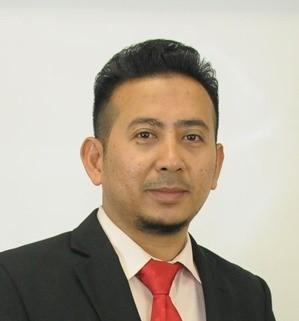
Assoc. Prof. Ir. Dr. Nur Izzi Md Yusoff, Senior Lecturer, Universiti Kebangsaan Malaysia.